
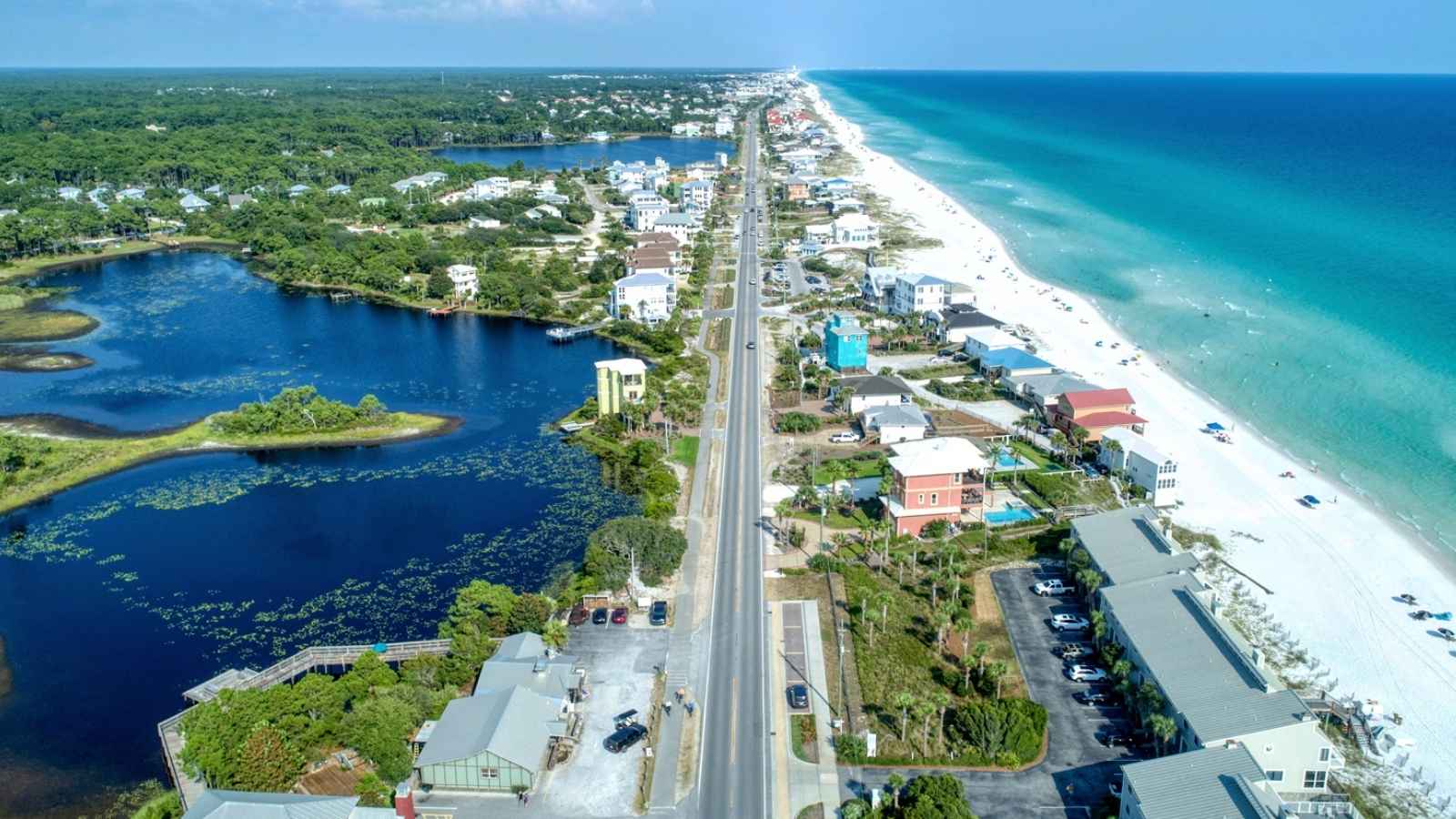
The coastal dune lakes of Walton County are rare bodies of water situated directly behind beach dunes. They maintain an intermittent connection with the Gulf of Mexico, and this mixing creates a unique habitat where freshwater merges with saltwater. The periodic breaching forms a temporary river that exchanges marine life, resulting in a nutrient-rich, brackish water environment you can only find in a handful of places globally.
I still remember the first time I witnessed a dune lake outfall breach while walking along the shore early one morning.
A heavy overnight rainstorm had pushed the local water levels exceptionally high, and a rushing channel of dark water was actively carving a deep trench straight through the white sand into the ocean. It was an entirely unexpected sight, because you rarely anticipate seeing a fast-moving river flowing directly across a public beach.
That specific moment is just one part of what makes the 15 named coastal dune lakes along Scenic Highway 30-A so deeply fascinating. Beyond this narrow stretch of the Florida Panhandle, you will only find similar ecosystems in remote regions of Madagascar, Australia, and New Zealand. Oregon holds a few as well, but the concentration found here in South Walton remains entirely unmatched.
These are living, breathing waterways that shift with every storm and season. Coming to know them is one of the most quietly remarkable things you can do on the Emerald Coast.
A Quick Hello From Us Before We Dive In
At Emerald Coast Vacation Rentals, we’re local experts, and besides offering a collection of fantastic Destin and 30A vacation rentals for a one-of-a-kind stay, we also have great local tips to help you make the most of your time here.
Head over to our blog where we’ve covered topics like choosing between Destin and 30A for your next summer escape and kid-friendly boat tours, with many more on the way.
Contents
- Why You Should Care About These Coastal Dune Lakes
- Which Coastal Dune Lakes Should You Visit?
- How to Experience the Lakes Firsthand
- When You Should Plan Your Visit
- What You Need to Pack and Safety Tips
- How You Can Help Protect the Ecosystem
- Where You Can Book Your 30A Getaway
Why You Should Care About These Coastal Dune Lakes
These shallow basins rest just behind the coastal sand dunes, relying on rainfall, groundwater seepage, and small tributaries to stay full. As water levels rise after major storms, pressure naturally builds against the sand berms separating the lake from the beach.
Eventually, the sand gives way, creating a wide outfall that channels the lake water directly into the Gulf of Mexico. Once the outward flow slows down, the tide allows saltwater and marine life to flow back inland. This intermittent connection acts as a highly effective natural flood control system for the surrounding coastal communities, preventing inland properties from taking on excess water.
When you first see one of these lakes, you will immediately notice the water has a dark copper appearance. Many first-time visitors mistake this color for pollution, but the tint actually comes from natural tannins released by decaying pine needles and coastal vegetation lining the shores. It is completely safe for recreation and is a clear indicator of a healthy, functioning ecosystem.
This blending of fresh and saltwater creates a highly dynamic environment that supports an unusual variety of wildlife. These lakes also act as natural filtration systems, capturing street runoff and filtering out impurities before the water reaches the open ocean.
Because the salinity constantly fluctuates, you can find freshwater fish swimming right alongside saltwater species. This biological diversity provides a vital habitat for migratory birds, protected turtles, and specialized dune grasses that cannot survive in standard freshwater environments.
Which Coastal Dune Lakes Should You Visit?
With 15 named coastal dune lakes scattered along the Scenic Highway 30-A corridor, focusing your attention on a few standout spots will give you the best experience during a short trip. Here are the top locations you should add to your daily itinerary.
Western Lake (Grayton Beach and WaterColor)
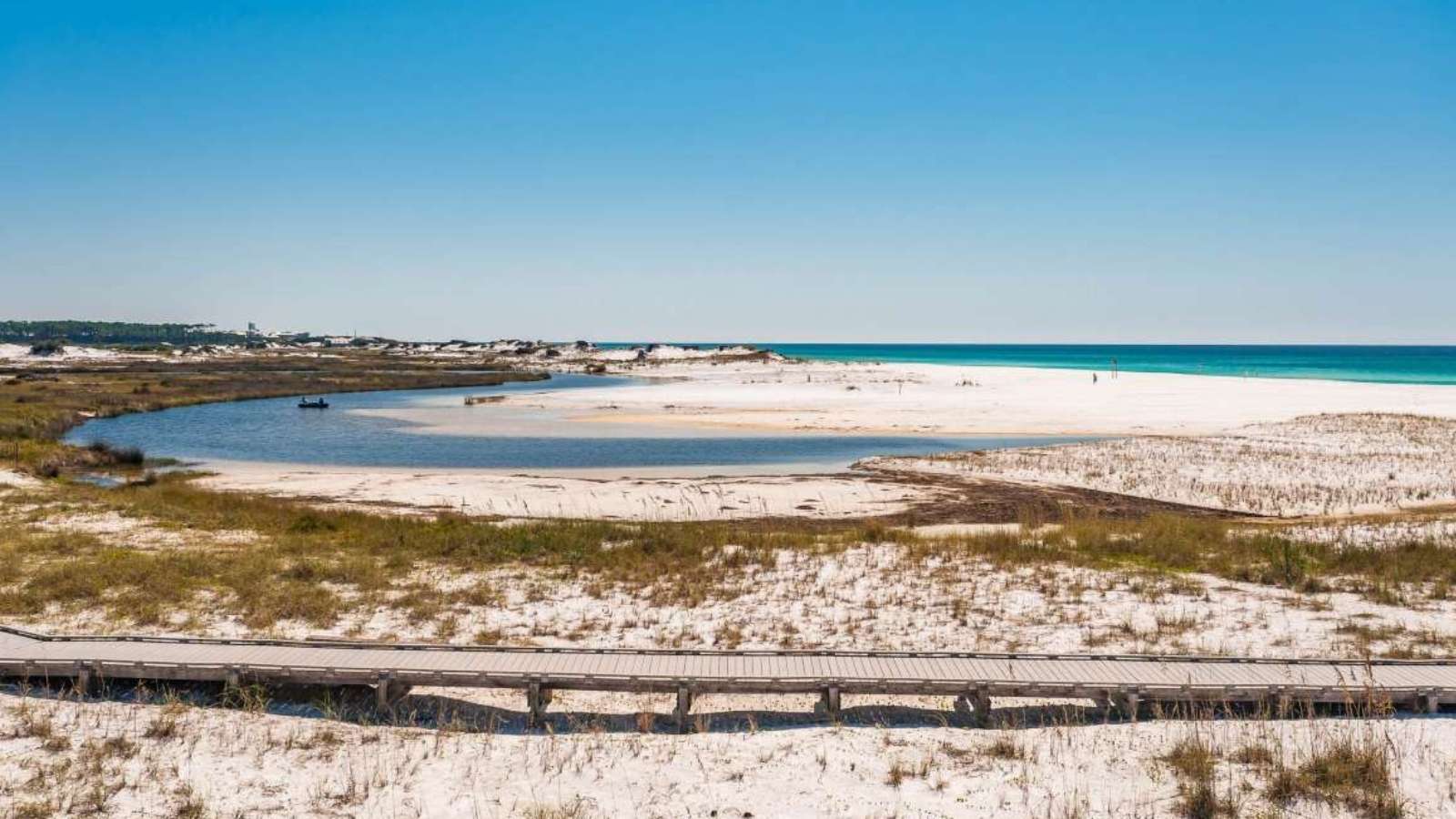
Western Lake is arguably the most photographed body of water in South Walton, covering nearly 200 acres. It features a beautiful backdrop of tall slash pines reflecting cleanly off the glassy surface. You can access this spot directly through Grayton Beach State Park or via the neighboring WaterColor community.
If you want to explore the water properly, rent a kayak or stand-up paddleboard at the Boathouse Paddle Club located right on the shore. Paddling around the quiet coves gives you a firsthand look at the rare coastal scrub habitat, and you will likely spot blue herons wading near the grassy banks.
Deer Lake (WaterSound Area)
If you love nature, you should prioritize Deer Lake during your trip. This basin sits almost entirely within the protected boundaries of Deer Lake State Park, meaning little to no residential development touches the immediate shoreline.
To explore it safely, walk the elevated wooden boardwalk that stretches gracefully across the sensitive sand dunes. This path gives you a secure way to observe local flora, like sea oats and woody goldenrod, without accidentally damaging the fragile ecosystem below your feet.
Camp Creek Lake (Seacrest)
Tucked away in the quiet Seacrest community, Camp Creek Lake offers 70 acres of serene water. This location remains particularly popular for local anglers because the varying salinity levels attract a surprisingly wide mix of fish.
Bring your tackle box and cast a line near the banks by the tidal creek. You have a solid chance of catching freshwater bass in the northern stretches or reeling in a saltwater flounder much closer to the beach outfall.
Eastern Lake (Seagrove Beach)
If you prefer a highly accessible location with an actively flowing outfall, Eastern Lake in the Seagrove Beach neighborhood is a great choice. The public county park at the intersection of Lakewood Drive and Lakeview Drive features a convenient boat launch, so you can put a canoe in the water there and navigate directly south toward the Gulf.
When the outfall is actively flowing, you can pull your boat onto the sand and watch the dark tannic waters carve a path straight into the surf.
Oyster Lake (Dune Allen)
Located on the western end of the highway in Dune Allen, Oyster Lake earned its name because the basin closely resembles the shape of a coastal shell.
The defining feature here is a picturesque pedestrian bridge that spans the entire width of the water. Because the structure restricts vehicle traffic, you can safely walk or bike across the lake while enjoying the scenery.
This pathway also serves as an ideal spot to pause for birdwatching during a morning ride and offers excellent lighting for photography right as the sun comes up.
Lake Powell (Inlet Beach)
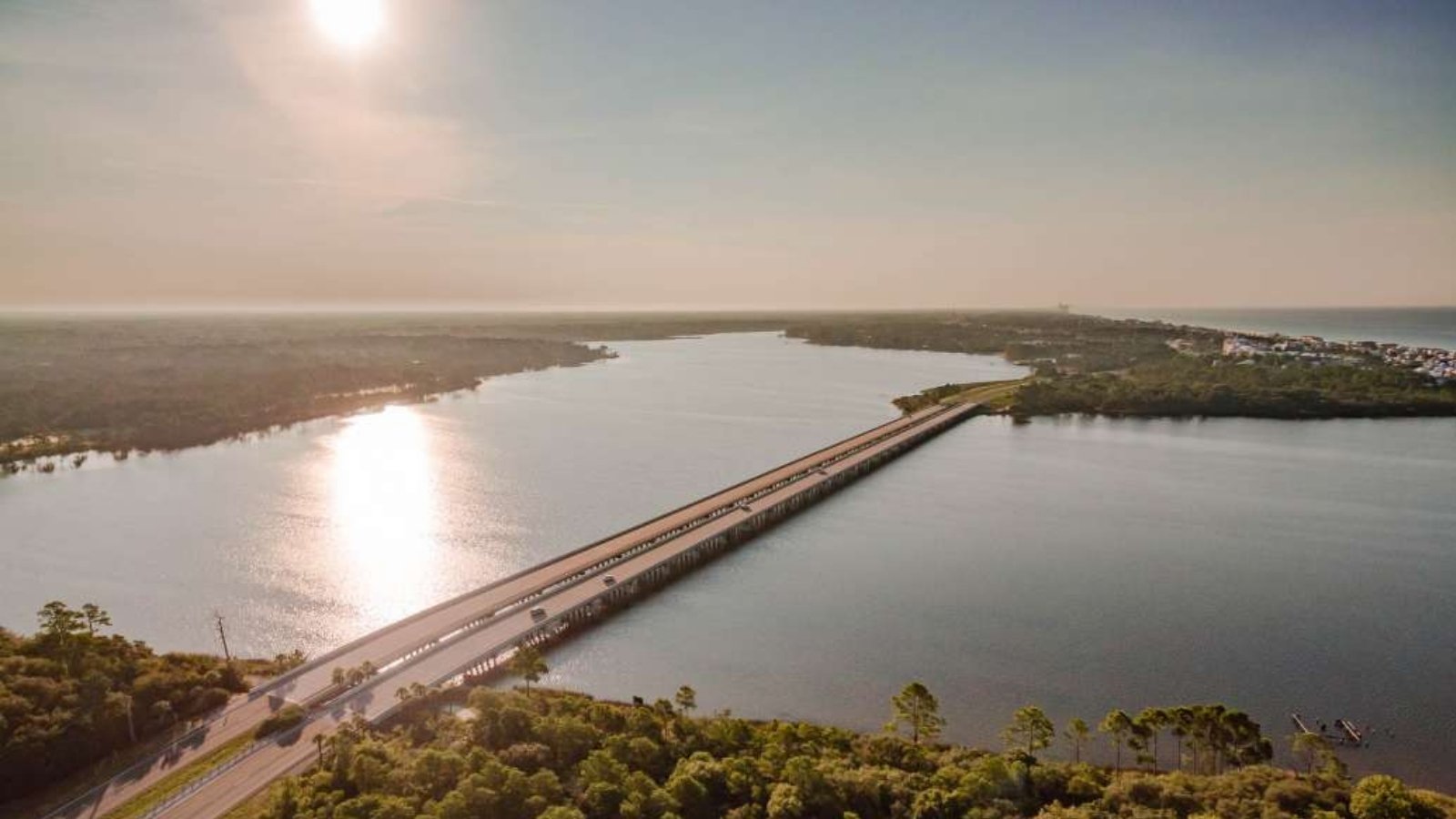
As the largest coastal dune lake in North America, Lake Powell spans nearly 800 acres across the border of Walton and Bay counties, and the majority of this impressive basin sits within Camp Helen State Park.
Due to its massive size, this lake accommodates slightly more activity than the smaller ones, though non-motorized vessels still dominate the water. Launching a kayak near the state park entrance allows you to paddle alongside historic oak trees and dense maritime hammocks before reaching the expansive beach outfall.
How to Experience the Lakes Firsthand
Once you arrive at the coastal dune lakes, getting out and experiencing them directly is highly encouraged. Motorized boats are heavily restricted or entirely banned on most of the lakes, which creates a very quiet atmosphere for outdoor recreation.
Paddleboarding and Kayaking
Gliding across the surface on a non-motorized vessel remains the absolute best way to navigate these shallow waters. Stand-up paddleboarding actually has deep roots in South Walton, and you will often hear locals refer to the activity as YOLOboarding.
Renting a paddleboard or kayak allows you to quietly slip into secluded coves and observe the shoreline wildlife in a respectful manner without causing a loud disturbance. Several local outfitters offer daily rentals and guided eco-tours for those who prefer to paddle with a knowledgeable local guide.
Fishing
Anglers love the dune lakes because the changing salinity creates an unusually mixed bag of catches. If you love fishing, you can spend a morning at one of the dune lakes casting a line from the grassy banks or dropping a hook from a seated kayak.
Depending on recent outfall activity, you might reel in largemouth bass, speckled trout, flounder, or redfish all in the same afternoon. Make sure you secure the proper Florida fishing license beforehand as the state requires a freshwater or saltwater license depending on the specific lake and the current water conditions.
Hiking and Biking
If you prefer to stay on dry land, the trails surrounding the water offer spectacular elevated vantage points.
The Timpoochee Trail is an 18.5-mile paved path that runs directly parallel to Scenic Highway 30-A. Cyclists taking this route ride right past the shores of Oyster Lake and Allen Lake, providing easy stops for taking photos.
Additionally, the state parks feature unpaved hiking trails that wind densely through maritime hammocks and coastal pine forests. Walking these dirt paths gives you an elevated view of the water and offers prime opportunities for birdwatching.
When You Should Plan Your Visit
You can visit these bodies of water year-round, but timing your trip strategically will greatly enhance the overall experience. If you want to witness the rare outfall phenomenon, plan to walk the shoreline immediately following a heavy rainstorm. A significant downpour raises the inland water levels rapidly, and this pressure forces the sand berm to break open, releasing a river directly into the saltwater.
For paddleboarding and photography, early mornings definitely offer the most ideal conditions. The coastal winds usually remain very calm right after sunrise, and because of this lack of breeze, the dark water develops a glassy, mirror-like surface.
This stillness provides an excellent opportunity to capture perfectly clear photos, and getting out early also helps you avoid the intense afternoon heat that builds up during the summer months. If you prefer to skip the summer weather altogether, traveling during the cooler months offers a completely different reward.
The changing seasons bring entirely different types of wildlife to the Walton County area. Fall is a busy time for local biology because thousands of Monarch butterflies pass through the Florida Panhandle during their annual migration south. You can often spot them resting heavily on the sea oats near the lake shores throughout October and November.
Spring also draws high numbers of migratory birds, so it’s advisable to bring a pair of binoculars during March visits to help you identify blue herons and snowy egrets nesting near the grassy banks.
What You Need to Pack and Safety Tips
Heading out to the coastal dune lakes requires a little bit of specialized preparation to ensure a comfortable trip. Packing the right gear will significantly improve your experience while keeping the environment safe.
- Reef-safe sunscreen: Protecting your skin is highly important under the intense Florida sun, and using eco-friendly lotions directly prevents harmful chemicals from entering these delicate water systems.
- Polarized sunglasses: The natural tannins make the water very dark, but polarized lenses effectively cut through the surface glare and help you spot fish easily.
- Dry bags: Keep your phone, wallet, and car keys secured safely in a waterproof sack if you plan on kayaking or paddleboarding.
- Bug spray: Mosquitoes and biting flies heavily frequent the marshy edges of the lakes, so applying repellent keeps the bugs away during the early morning and late evening hours.
Always check the local water depths before launching a boat, as the shallow levels fluctuate heavily based on recent rainfall. And while paddling along the banks, keep a close eye out for submerged logs or sharp oyster shells hiding just below the surface.
You might occasionally spot an alligator or a snapping turtle sunning casually on a distant log, and seeing these animals is a thrilling part of the journey. Just maintain a respectful distance and observe the native creatures in their natural habitat without trying to feed them.
How You Can Help Protect the Ecosystem
These lakes form a fragile environment that needs constant care and attention. As a visitor, you play a massive part in keeping this area healthy for future generations, and one of the ways you can help is staying strictly on the designated trails.
The sand dunes rely on specific plants, like sea oats, to firmly hold the ground together and stop coastal erosion, and walking off the main path can quickly destroy those fragile root systems. Therefore, always use the built wooden boardwalks or marked hiking paths to reach the shoreline.
You should also follow a strict pack it in, pack it out rule when visiting the parks, and the easiest way to ensure you follow this rule is by bringing a small bag with you to hold any snack wrappers or empty drink bottles securely. Taking your personal trash back to your rental property ensures the sandy shores stay clean for everyone else.
By following these highly basic steps, you directly support local conservation groups and keep the landscape completely pristine.
Where You Can Book Your 30A Getaway
The coastal dune lakes offer something genuinely rare — an ecosystem found almost nowhere else on earth, right at the edge of one of the most beautiful stretches of coastline in the country. Whether you spend your days paddling quietly across dark tannic water, casting a line at dawn, or simply watching an outfall carve its way to the Gulf, these lakes have a way of staying with you long after you leave.
When you’re ready to make the trip, booking directly through Emerald Coast Vacation Rentals ensures you have everything you need waiting for you at the end of the day. A spacious living area, a fully equipped kitchen for a fresh seafood dinner, and a comfortable bed after a long day on the water. Browse our 30A properties and find your perfect home base for the journey.